All required input files listed in this example can be retrieved by executing the following command:
$ pan -t 01
After the above command is executed, a directory named 01 is created, containing all files.
Problem description
In order to run Part-Level Powder-Bed analysis in Local Simulation, a process parameter (PRM) file must first be generated. The PRM file links the small scale moving-source analysis to the full part-level analysis. This is illustrated in Figure 1.1 below.
To create accurate PRM files, which will result in accurate part scale models, PRM generation must be performed using the prm_gen program. Merely running the small scale simulations without using prm_gen will leave out key portions of the PRM generation process which will produce an inaccurate PRM file.
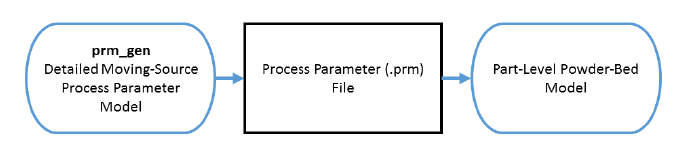
Figure 1.1: Relationship between the fine scale and part-level analyses
Here, a process parameter file is generated for Inconel® 625 using the following set of parameters:
- Power: 153 W
- Laser spot size: 0.08 mm
- Scan speed: 600 mm/s
- Layer thickness: 0.04 mm
- Hatch spacing: 0.10 mm
- Recoater time: 20 s
- Hatch angle rotation: 67 degrees
The parameters are entered into the *LSRP card. The *GTAB card is used to output and name the process parameter file. The flow of the analysis is shown in Figure 1.2.
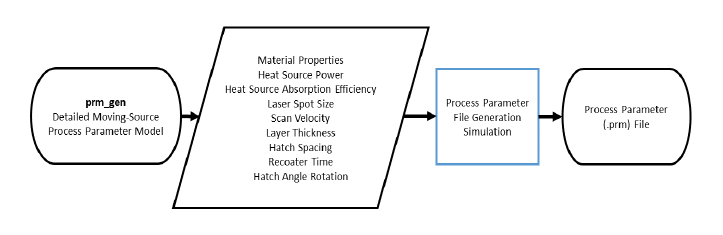
Figure 1.2: Flowchart for generating PRM files
A time incremental thermal analysis is performed first to compute the temperature history of the part followed by a time incremental mechanical analysis. The PRM file is filed out for several different section thicknesses and temperatures. The thickness of a section is controlled by using the 10th input of the *LSRP card and the temperature is controlled by using the *INIT card. Once the full table is filled out in the PRM file, the file can be input along with geometric information for the Part-Level analysis as illustrated in Figure 1.3. Part-Level analyses are demonstrated in Examples 2 and 3.
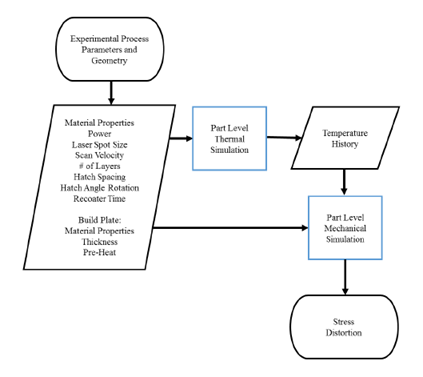
Figure 1.3: Flowchart for generating PRM file
Running Local Simulation
- From a command line run
$ pan -q runs
This will run each combination of temperature and thickness in order to generate the lookup tables stored in the process parameter (PRM) file.
The result of the analysis will be a single process parameter (PRM) file. The file will be read into succeeding Powder-Bed Part-Level analyses.