Understanding the effect of structural plasticity on stress results.
Video length (2:49).
Sample files for use with the tutorials are available on the Download Page.
The simulated parts below show the predicted stresses and displacements after the part is removed from the build plate by electrical discharge machining (EDM).
The results on the left are generated with Structural Plasticity set to Off. They show plasticity effects introduced by the moving heat source via the multi-scale method, but yielding is not turned on at the part level. This method is faster than with Structural Plasticity set to On, which produces accurate results with the part still on the build plate, but tends to over-predict both stresses and post-EDM distortion.
The results on the right are generated with Structural Plasticity set to On. This method introduces plastic yielding at the end of the part level simulation, resulting in more accurate simulation of residual stresses and post-EDM distortion.
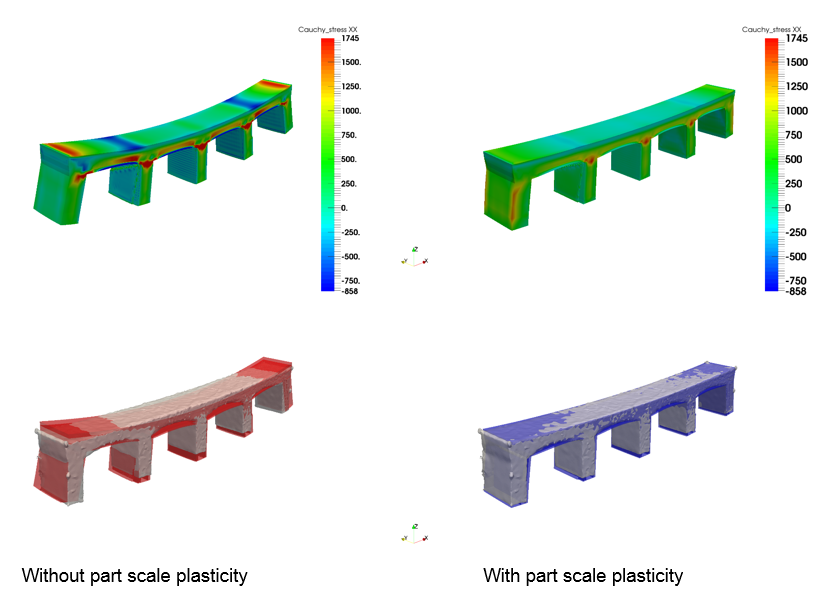
The effects of part scale plasticity
On the right side, we see the more accurate stress results with part scale plasticity turned on. The reduced deflection after EDM produces a better agreement with experimental results.
- Click
, browse to the tutorial sample files, and in the folder Example_13, open
Example_13.tivus.
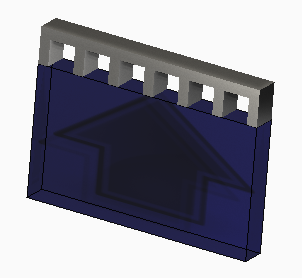
- On the Home tab, click
.
Note the difference in results between setting Structural Plasticity On or Off.
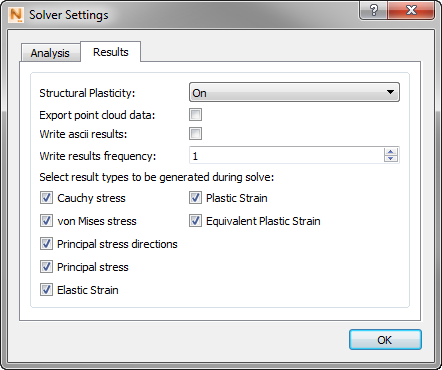
- Set Structural Plasticity On, and then click Solve.
- Load the results and turn on the Cauchy stress results.
- For better visibility, right-click
, and then deselect
Element Edges.
On the Results tab, in the Animation panel, note that only two indices or time steps are shown:
- After the part has cooled, when the last layer is straining to contract, but is restricted by the solid layers below.
- The post-EDM response, which shows some spring back.
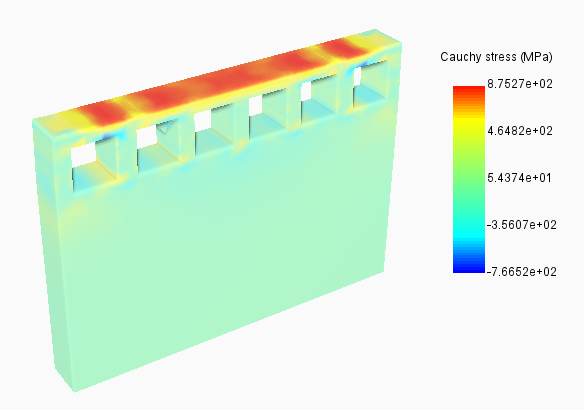
Cauchy stress after cooling
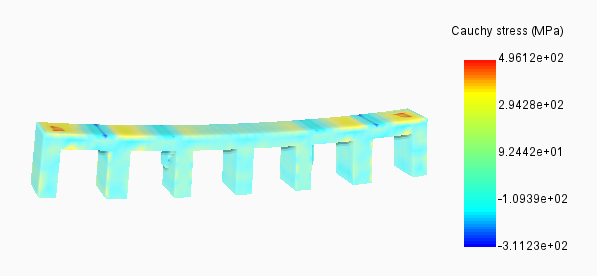
Cauchy stress after EDM