Unfold
Use the Unfold  . tool to unfold a sheet metal component before you create features across multiple flanges, faces, and bends in Fusion.
Sheet metal manufacturing requires clearly defined geometry for flat part fabrication. For most sheet metal workflows, it's standard to cut holes and slots before you bend a sheet metal component.
Unfold is a mode within the sheet metal design workspace. When you unfold a sheet metal component, a feature is created in the timeline.
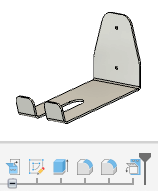
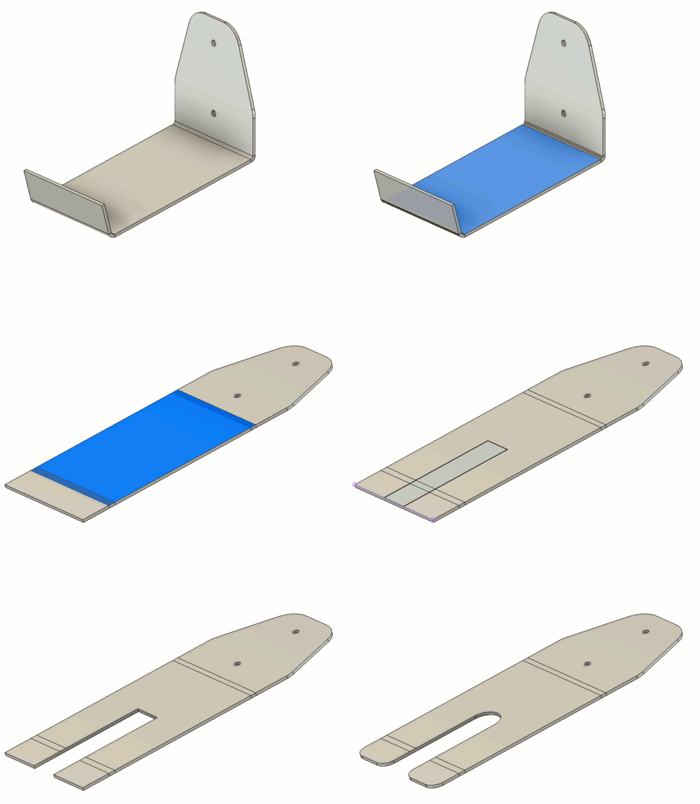
To create manufacturable features, Unfold the sheet metal component. Then add the necessary features that span across bends, like holes or slots. Then click Refold to restore the original shape.
This ensures that the walls of an extruded features are perpendicular to the flat surface of the flattened sheet metal surface.
Unfold vs flat pattern
Unfold and Flat pattern are different flattened states and are not interchangeable.
Unfold is a temporary, in-session flattening of the same sheet metal body you edit in the Design workspace. Relief shapes and bend relief corners stay aligned with the folded model on purpose: when you Refold, the body must return to the same folded model, so Unfold keeps relief behavior simple and consistent with folded 3D model.
Flat pattern is a separate derived flat representation (has its own browser entry and linked timeline). It exists so you can document and export how the sheet will be cut. Relief geometry there follows your rules and feature settings as the final flat layout, so you can see all applicable cut geometry. When the folded 3D model changes, you update the flat pattern, but changes made only in the flat pattern do not update the folded model.
Use Unfold when you need a flat working view to add features across bends, then Refold. Use Flat pattern for drawings, DXF export, and accurate flat cut geometry.
Tips
- Add features, like holes and extruded slots, to a sheet metal body while it is unfolded to create components that are easier to manufacture.
- Use Flat Pattern, rather than Unfold, to create drawings of flattened sheet metal components.