An overview of the scripting actions available to generate or process support entities
Jump to:
Actions to generate support geometry
 Edge with bar support
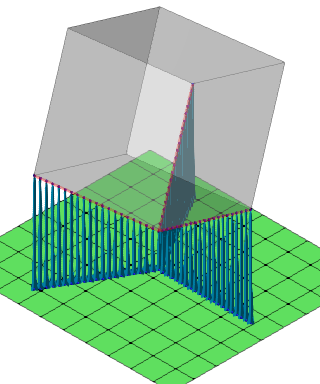 Down-oriented, critical edges are supported by tracing them with a row of bar supports each |
Edge with polyline support
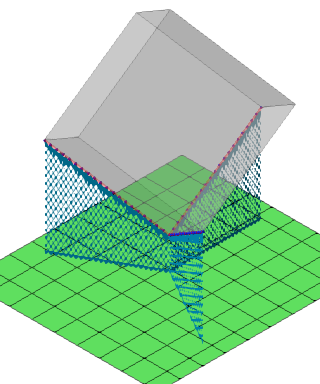 single-wall polyline supports. |
Area with volume support
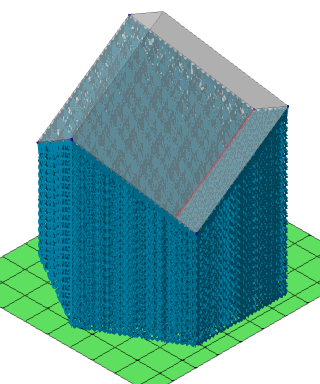 Critical areas of downskin receive volume supports. |
Area with bar support
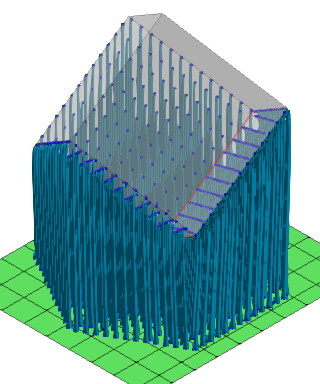 Critical areas of downskin receive bar supports. Bar supports may be branched into bouquets. If the area contains local points, these are supported with priority, and the regular grid of bar supports is adjusted so as to avoid duplicate support bars in close or same positions. |
Area with polyline support
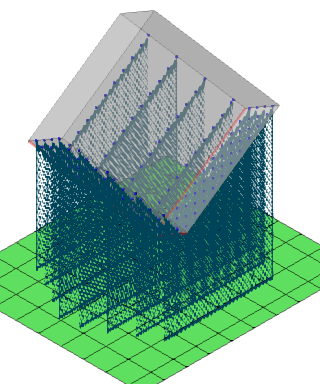 Critical areas of downskin receive supports in the form of sets of straight polyline walls in parallel orientation. |
Down-oriented point bar support
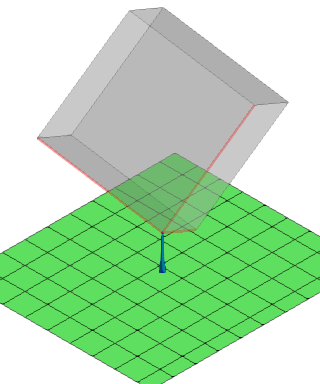 Critical, down-oriented corner points or clusters receive bar or few bars each. |
| Surround volume by polyline
Helps to reinforce existing volume supports. Volume supports are identified and enclosed in a polyline. |
Medial axis with polyline support
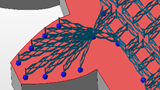 Adds polylines in corners and narrow passages that would otherwise require unreasonable settings for other support actions. The polylines follow the medial axis, or the skeleton, of the cluster shape. |
Cluster contour with polyline
Applies a polyline to the contour of a cluster. This is different from Surround volume by polyline in that the cluster contour is supported no matter whether the cluster currently contains volume support. |
| Base plate
The base plate is a volume of configurable thickness that follows the shadow area of the part. In addition, it follows the contours of solid volume support structures as they touch the platform surface with a configurable margin. 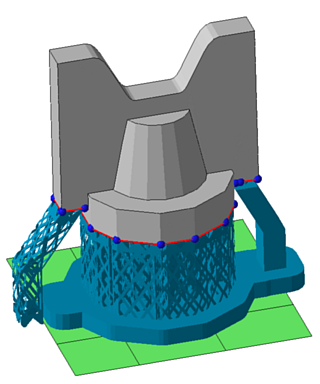 A wingnut with a base plate. Note how the solid volume support (right) extends the baseplate circumference beyond what has been derived from the part's shadow area alone. |
Adaptive Lattice Bars
This action generates a regular volumetric scaffolding from lattice cells of interconnected bars. This makes very rigid bar support possible in areas that have undercuts themselves while mimizing part-to-part support. The bar density is also dependent on the individual support requirement: If there is enough free volume available, multiples of cells are recursively collapsed into singular larger cells. 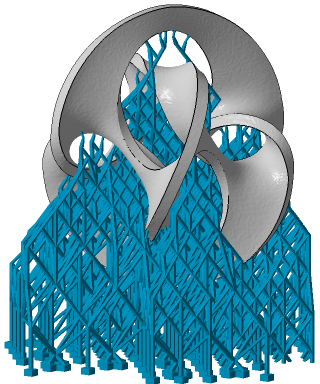 The scaffolding of bars supports otherwise difficult-to-reach surfaces well. |
Post-processing actions
These support actions modify existing supports. They do not generate new support geometry except as a side effect from modifying generation parameters for already generated supports.
|
Delete support
This action deletes generated support based on certain criteria. This can be used to clean up support generation with very particular support requirements. For instance, small cavities make supports difficult or even impossible to remove. Configuring an exclusion rule for support generation would be rather tricky, but an additional processing step that removes unwanted supports is much easier and more flexible to use. |
Modify support
Filters for individual, already existing support entities based on criteria and regenerates them with updated parameters |