Automation Updates
Automation of Structural Bridge Design has been further developed with Mathcad integration, additional JSON output, and improved CSV/spreadsheet export.
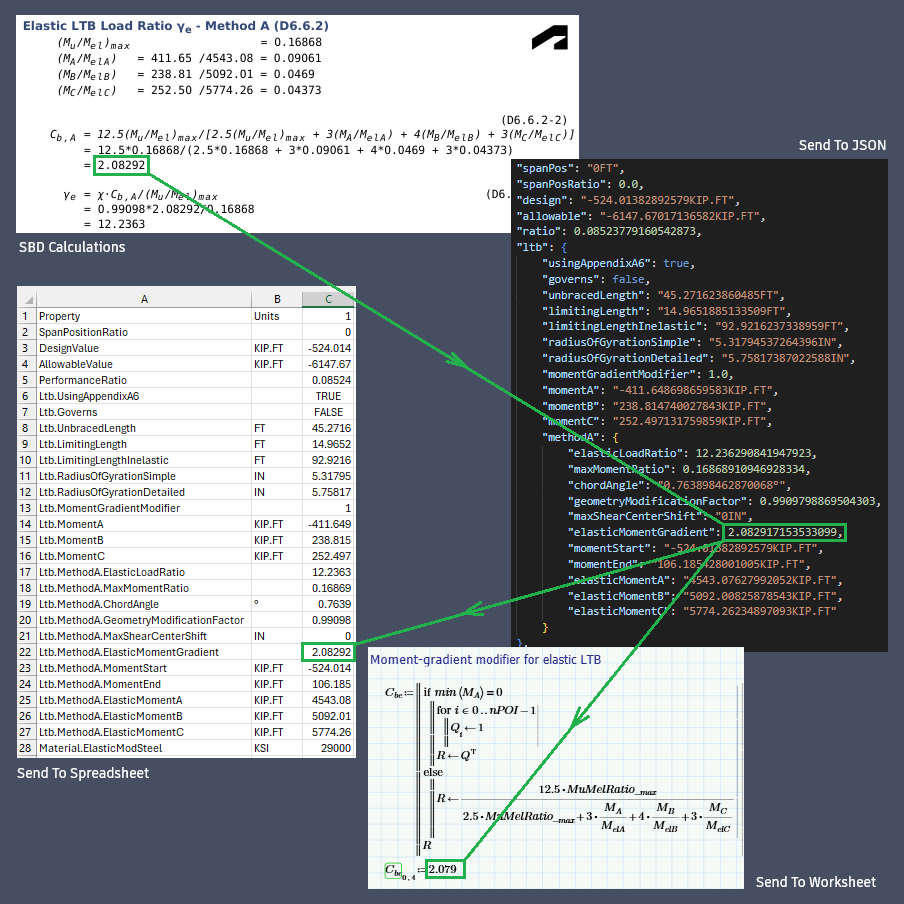
Automation Output
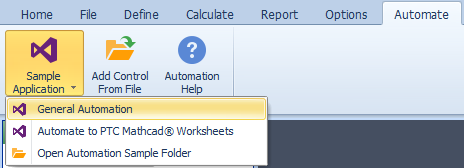
A significant number of section and beam analysis results and geometric properties have been exposed for automation output, unlocking parameters previously only available within design calculations. New library classes have been added to the SBD Automation solution to define these parameters.
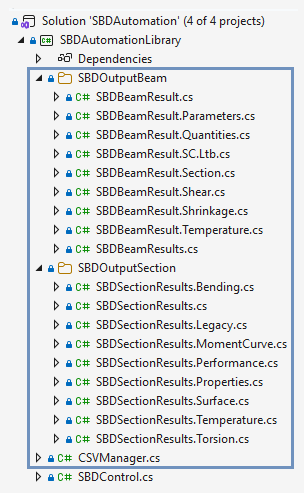
For beam analysis, this includes lateral torsional buckling (LTB) parameters for steel composite beams, shear design outputs, temperature and shrinkage effects, and detailed section geometry at each point of interest along the beam.
If you have existing automation definitions, set the includeLegacyItems control setting to true to include pre-2027 output tag names alongside the current tags, avoiding breaking changes during migration. See Deliverables for details.
A new CSVManager utility class and project named Example 3: Beam Analysis with CSV Export demonstrate extracting these results to CSV format with unit handling, for a specific or every Point of Interest (POI) along the beam.
Note: The sample solutions now target .NET 10. Visual Studio 2026 version 18.0 or higher is required to build the sample code.
Updated Examples and Documentation
The published JSON examples have been updated to demonstrate accessing the new output parameters using selected and all points of interest. A new US Mathcad automation input example has also been added, which uses all points of interest for bending to provide the moment data density required for lateral torsional buckling quarter-point calculations.
Mathcad Integration
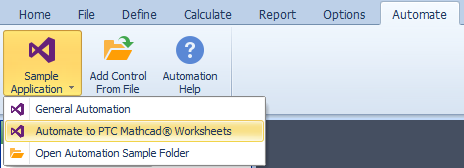
A new SBDAutomation-Mathcad sample solution has been added, demonstrating how to take output from Structural Bridge Design automation and feed it as input into Mathcad® worksheet files. The worksheets can then use this input to perform additional calculations.
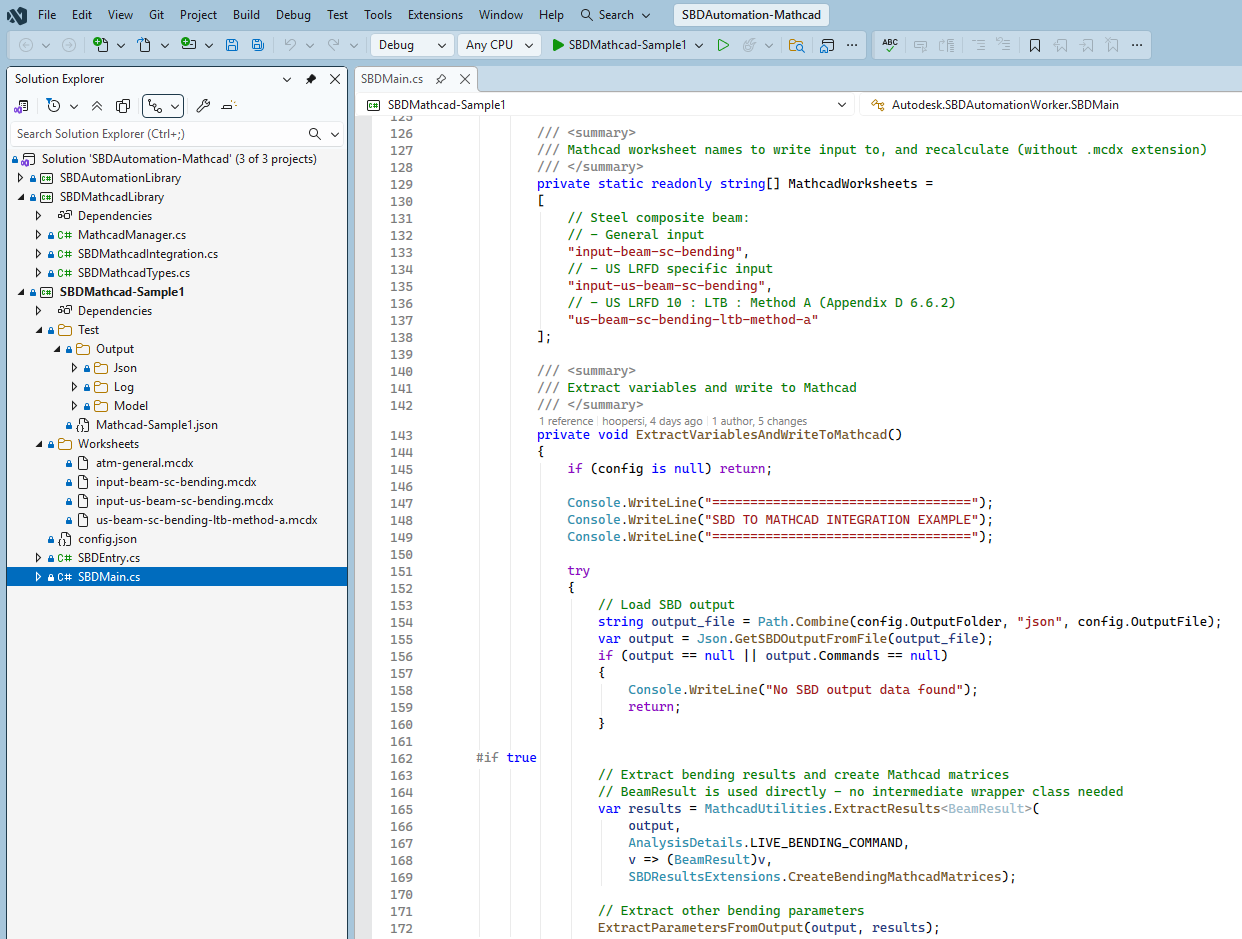
Key features include:
- Automated extraction of beam analysis results from SBD output.
- Writing variables directly to Mathcad worksheet files, with support for multiple worksheets in a single run.
- Flexible configuration of Mathcad input names, units, and descriptions.
The example demonstrates integration for steel composite beam analysis to US AASHTO LRFD, including lateral-torsional buckling calculations.
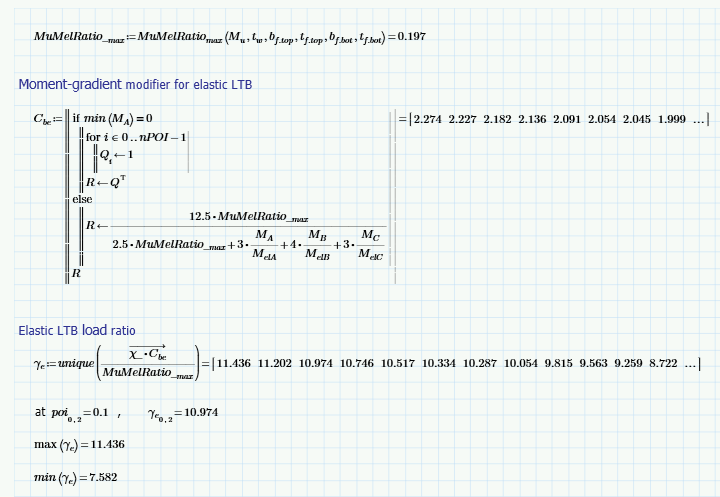
For more information, see SBD to Mathcad.
Note: PTC®, Mathcad® and Mathcad Prime® are registered trademarks of PTC Inc.