Arnold for 3ds Max 5.9.2.0
Updates to MaxtoA since 3ds Max 2027 include Flow Render Tech Preview and tyFlow Volume support
MAXtoA 5.9.2.0 is a feature release using Arnold 7.5.1.1. MAXtoA 5.9.2.0 includes a Tech Preview of Flow Render, and support for tyFlow volumes.
See the MAXtoA release notes for the changes in each MAXtoA version.
Flow Render Tech Preview
MAXtoA 5.9.2.0 includes a Tech Preview of Flow Render, an Arnold cloud-rendering solution. We are providing 2400 minutes (per user, per month) of rendering time to Arnold users for testing and evaluating the service. Please report any feedback or issues in the Arnold feedback forums.
See the Flow Render Tech Preview documentation for more information, or check out this video tutorial.
Enhancements
tyFlow Volume support
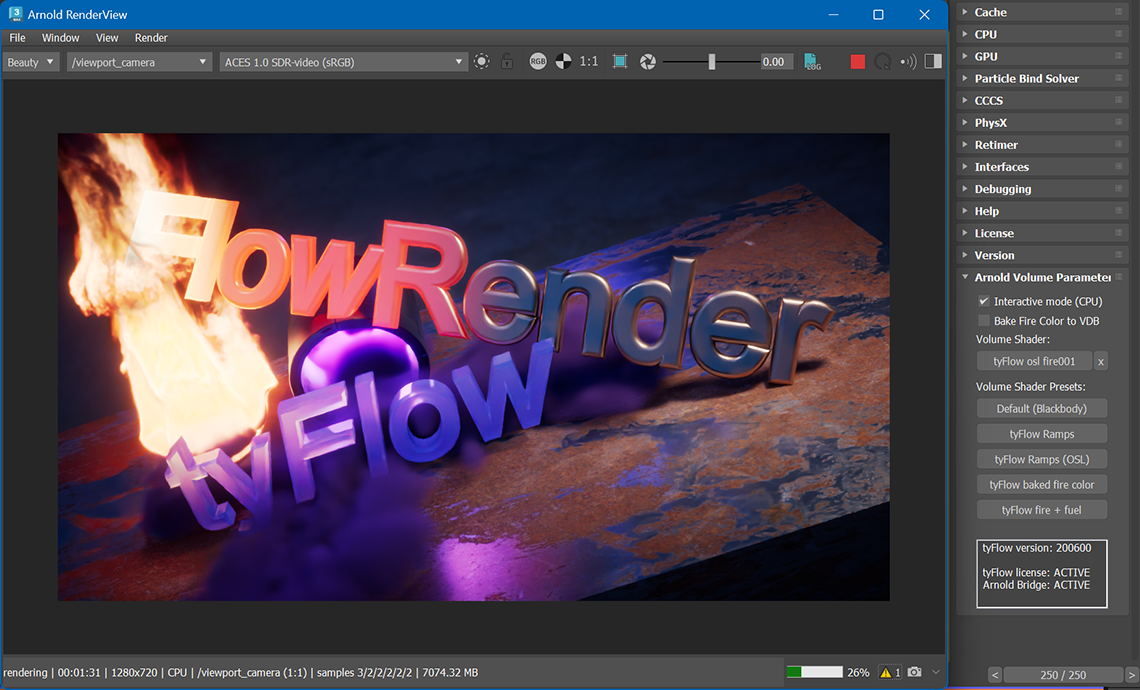
MAXtoA adds a rollout to tyFlow that allows you to set an Arnold volume shader. The default is a standard Blackbody setup. This is the most physically accurate, and uses the tyFlow temperature channel to create fire colors via Boltzmann's law.
To render the fire color and opacity ramps in tyFlow, you can use the other preset buttons. tyFlow Ramps bakes an approximation of the tyFlow ramps into editable Arnold ramps, that you can edit interactively.
tyFlow Ramps (OSL) generates a more exact implementation of the tyFlow ramps by generating an OSL shader on the fly. This shader is not editable but should match more closely to the look of tyFlow. Simply edit the ramps in tyFlow and push the preset again to update.
Custom AOVs for volume shaders
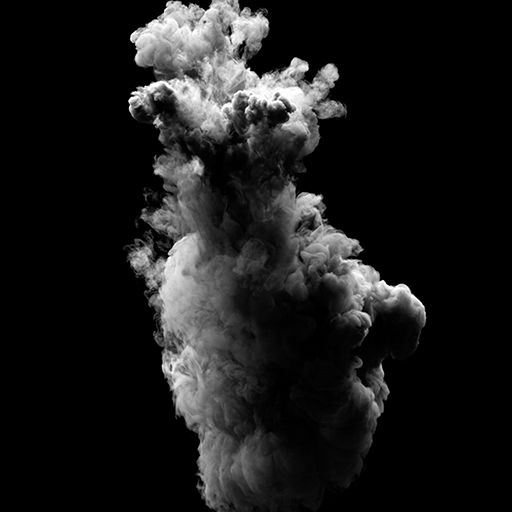
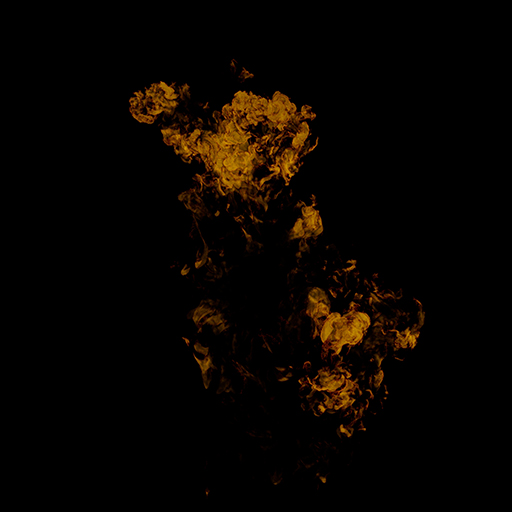
The aov_write_rgb ,aov_write_float , andaov_write_rgba shader nodes can now be used in volume shader networks, just as they already work for surface shaders. Previously, custom AOVs were silently ignored in volume contexts. The volume raymarcher now collects AOV closures at each step and integrates them using Beer-Lambert weighting, producing physically consistent AOV outputs. (ARNOLD-6548)
- Both flat (EXR, TIFF) and deep EXR outputs are supported.
- A warning is logged when aov_write_rgb nodes with conflicting blend_opacity settings are connected to both surface and volume shaders writing to the same AOV name.
- There is approximately a 16% overhead with two active volume AOVs at fine step sizes (step_size=0.01).
 |
 |
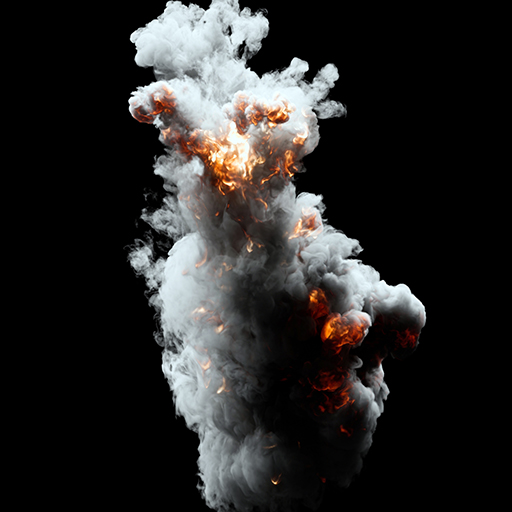 |
| No Emission | Custom 'temperature' AOV mask | Beauty |
New tangent_space_type option for normal_map
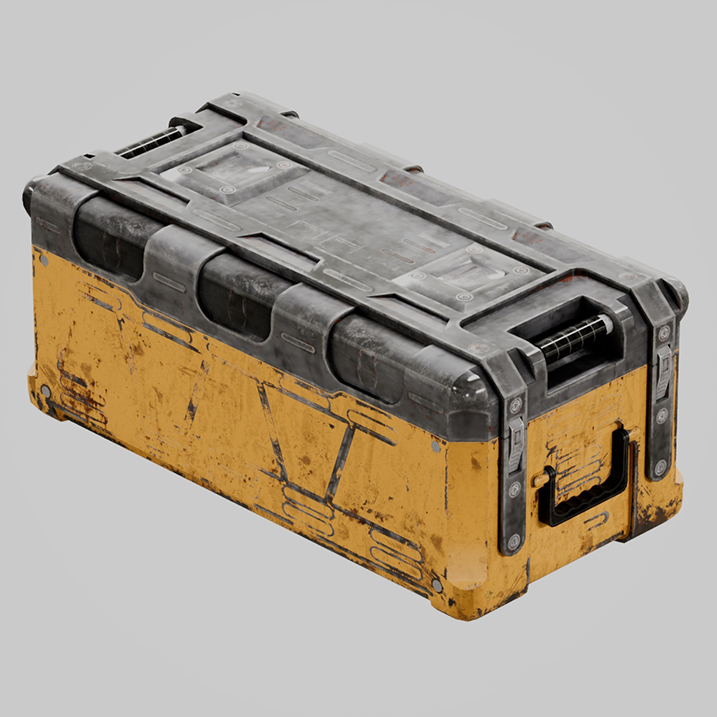
A new tangent_space_type parameter adds support for
MIKKTSpace normal mapping. The standard mode preserves the previous behavior, while the mikk mode imports normal, tangent, and bitangent generated with MIKKTSpace in DCC tools such as 3ds Max and evaluates the normal map using MIKKTSpace for consistent shading across applications. (ARNOLD-8377)
 |
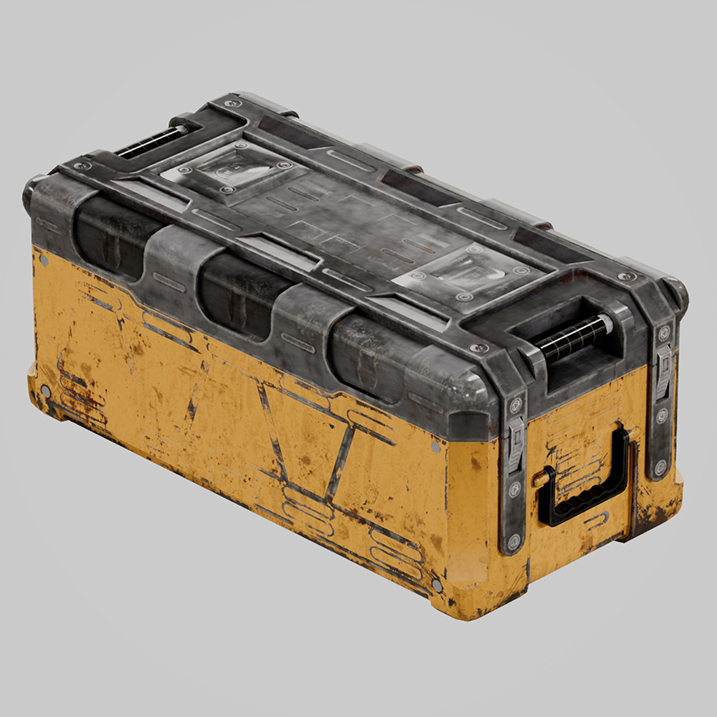 |
| Standard | MIKKTSpace |
Faster CPU renders on Windows
CPU renders on Windows have been optimized. Most, though not all, scenes show faster render times. (ARNOLD-17549)
| Scene | 7.5.1 speedup vs 7.5.0 |
|---|---|
| OpenPBR shader ball | 1.16x |
| gtc-robot | 1.08x |
| Disney cloud | 1.07x |
| ALab | 1.04x |
| Intel jungle ruins | 1.00x |
Apply unit auto-scaling to linked shader parameters
Linked shader parameters are now auto-scaled to scene units when driven by links (for example,
subsurface_scale from a texture), ensuring unit-dependent values retain their expected magnitudes across different scene unit settings. (ARNOLD-17176)
Custom position for nearest_points shader
The nearest_points shader has a newquery_position parameter, which allows you to link to an input and customize the point where the point cloud is queried. When unlinked,sg->P (world-space shading position) is used instead. (ARNOLD-17360)
New interior_set string user data
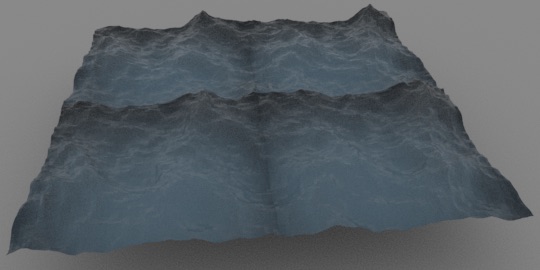
The new interior_set attribute enables coherent scattering (such as transmission and SSS) across shapes that share the same set name. This allows smooth propagation of scattering between separate shapes, such as large ocean surfaces modeled as multiple tiles.interior_set replacessss_setname, although sss_setname remains supported for now. If both attributes are present on the same object,interior_set takes precedence. (ARNOLD-9038)
 |
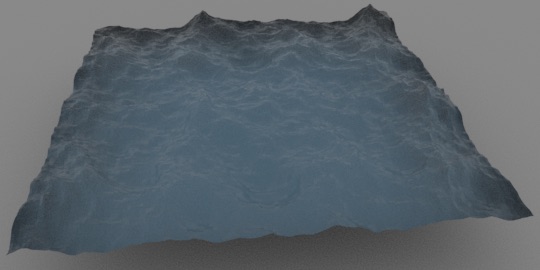 |
| without interior_set | with interior_set |
OSL generalized Schlick Fresnel exponent
The OSL generalized_schlick_bsdf closure now fully supports the exponent parameter for both reflection and transmission lobes. Previously, Arnold ignored the exponent (effectively always using the standard Schlick value of 5) and approximated the transmission lobe by converting F0 to a dielectric IOR via the Gulbrandsen method. Both lobes now use a proper generalized Schlick Fresnel evaluation with configurable f0, f90, and exponent. Scenes using generalized_schlick_bsdf with a non-default exponent, or with significant transmission, may produce slightly different renders. (ARNOLD-16834)
Bloom driver luminance threshold
Bloom now uses a smoothed luminance-based threshold to avoid hue shifts from per-channel clipping. (ARNOLD-17443)
Improved maketx error messages
TX conversion error messages now include the target TX filename, which makes it easier to identify the cause of the error. (ARNOLD-17044)
Include options node and driver outputs in stats JSON
Stats output now records the top-level options node and, for each image driver, an entry with the driver filename and AOV and output details, improving the metadata available for diagnostics and downstream tools. (ARNOLD-16812)
USD Enhancements
- USD warnings and errors in Arnold logs: The USD composition warnings and errors when loading a file are now included in the Arnold log usd#2435
API Changes
- volume_double_henyey_greenstein OSL support: The double Henyey-Greenstein phase function volume_double_henyey_greenstein, which corresponds to AiClosureVolumeDoubleHenyeyGreenstein, is now available in OSL. (ARNOLD-16701)
Bug Fixes
- MAXTOA-2144 - Fixed a crash when switching between different Arnold procedural objects without creating any objects
- ARNOLD-15273 - Rare GPU artifacts with certain scene, GPU, and driver combinations
- ARNOLD-17465 - Crash when a node turns invalid in IPR
- ARNOLD-17498 - Fixed incorrect volume mipmap selection in certain situations
- ARNOLD-17500 - Crash with invalid "idxs" user data
- ARNOLD-17553 - Crashes with empty arrays in polymeshes
- ARNOLD-17561 - [GPU] Matte value not inherited by child nodes
- ARNOLD-17656 - Fixed a hang when replacing a shader that was connected to a light
- ARNOLD-17660 - AiProceduralViewport crashes with implicit nodes
- usd#2433 - Support interactive changes of shaders connected to quad lights
- usd#2547 - Changing material terminal is not updated with Hydra 2
- usd#2558 - Indexed user data shouldn't author the idxs companion to USD
- usd#2563 - Incorrect region renders in Hydra when one axis is not cropped
- usd#2566 - Fixed crashes when a render delegate is deleted while another is rendering
- usd#2568 - Changing the root shader in IPR is not updated when it was present in the previous shading tree
- usd#2572 - Arnold product types not working if drivers:parameter:aov:name is not defined
- usd#2580 - String per-instance primvars cannot resolve indices
- usd#2582 - Arnold-disabled nodes should not be authored to USD
- usd#2589 - Implement scene index dependencies when materials get added or removed
- usd#2607 - Updating light shaders interactively hangs the render
- usd#2611 - Support exporting geometries that get added during a sequence
- usd#2615 - Export material bindings for volume nodes in the volume context
- usd#2613 - Missing clip files and UDIMs from search path when collecting scene assets
Incompatible changes
- OSL generalized_schlick_bsdf rendering change: Scenes using the OSL generalized_schlick_bsdf closure with a non-default exponent value (other than 5) or significant transmission may produce slightly different renders due to corrected Fresnel evaluation. (ARNOLD-16834)
- Renamed enum AI_CLOSURE_DEBUG to AI_CLOSURE_AOV: Code referencing AI_CLOSURE_DEBUG must be updated. (ARNOLD-6548)
System Requirements
3ds Max 2025, 2026, or 2027
Windows 10 or later, with the Visual Studio 2019 redistributable.
CPUs need to support the SSE4.1 instruction set.
GPU rendering and Optix denoising require an NVIDIA GPU with the Maxwell architecture or later.
- Note: GPU rendering and OptiX denoising do not work with driver versions 582.16/580.126 and older, and will log an error and abort the render. You can use New Feature Branch drivers. (ARNOLD-17405)
- On Windows, we recommend 591.28 or higher drivers.
Intel OIDN GPU support is limited to:
Windows
- Intel Xe dedicated and integrated GPUs
- NVIDIA GPUs using Turing, Ampere, Ada Lovelace, Hopper, and Blackwell architectures
- AMD GPUs with RDNA 2, RDNA 3, RDNA 3.5, and RDNA 4 architectures